More efficient acquisition
Understand which audiences, offers and channels bring customers with purchase potential and room for margin.

We connect marketing, sales and data to find bottlenecks, test opportunities and expand what delivers results. Growth Hacking for companies pursuing growth with efficiency, margin and direction.
Strategy and execution alongside your team, with priorities tied to your business.
Learning that informs the next cycle
Growth Hacking is a process of experimentation: identify an opportunity, form a hypothesis, test it and decide based on evidence. In mid-sized and large companies, this work spans channels, teams and the entire customer journey.
Understand which audiences, offers and channels bring customers with purchase potential and room for margin.
Connect the website experience to qualification, first contact and sales follow-up in the CRM.
Work on activation, repeat purchases, contract expansion and retention based on customer behavior.
A business objective guides the work. Hypotheses enter a prioritized backlog, tests have defined criteria and learnings are documented for the whole operation.
We map the funnel, data, channels, journey and sales capacity. We establish a baseline and identify the bottleneck to address first.
We rank hypotheses by expected impact, evidence and effort. Each test gets an owner, a metric and spending limits.
We run controlled changes to offers, campaigns, pages or journeys. We compare outcomes and check data quality.
Changes supported by evidence expand gradually. Unsuccessful tests are adjusted or stopped, with the learning documented.
Cycle length depends on data volume, the buying cycle and dependencies within your company.
Explore example hypotheses for each stage. The diagnostic determines which ones fit your situation.
An offer tailored to a segment may generate more qualified opportunities than a broad campaign.
Reducing time to first contact and tailoring the approach to lead source may improve sales progression.
An activation journey tailored to customer profiles may help customers experience value sooner and keep buying.
Illustrative examples. These are not reported results or performance promises.
Cluster works with marketing, sales, technology and business leaders. The plan accounts for your company's tools, approvals and execution capacity.
A common view of revenue, efficiency and pipeline quality, with indicators for each stage and clear definitions of a qualified opportunity.
Defined roles for proposing, running and approving experiments. Budgets, dependencies and brand constraints are part of the plan.
Media, website and CRM connected according to scope and available integrations, with involvement from service and sales teams.
A record of hypotheses, tests, outcomes and decisions. What the team learns becomes a reference for future cycles.
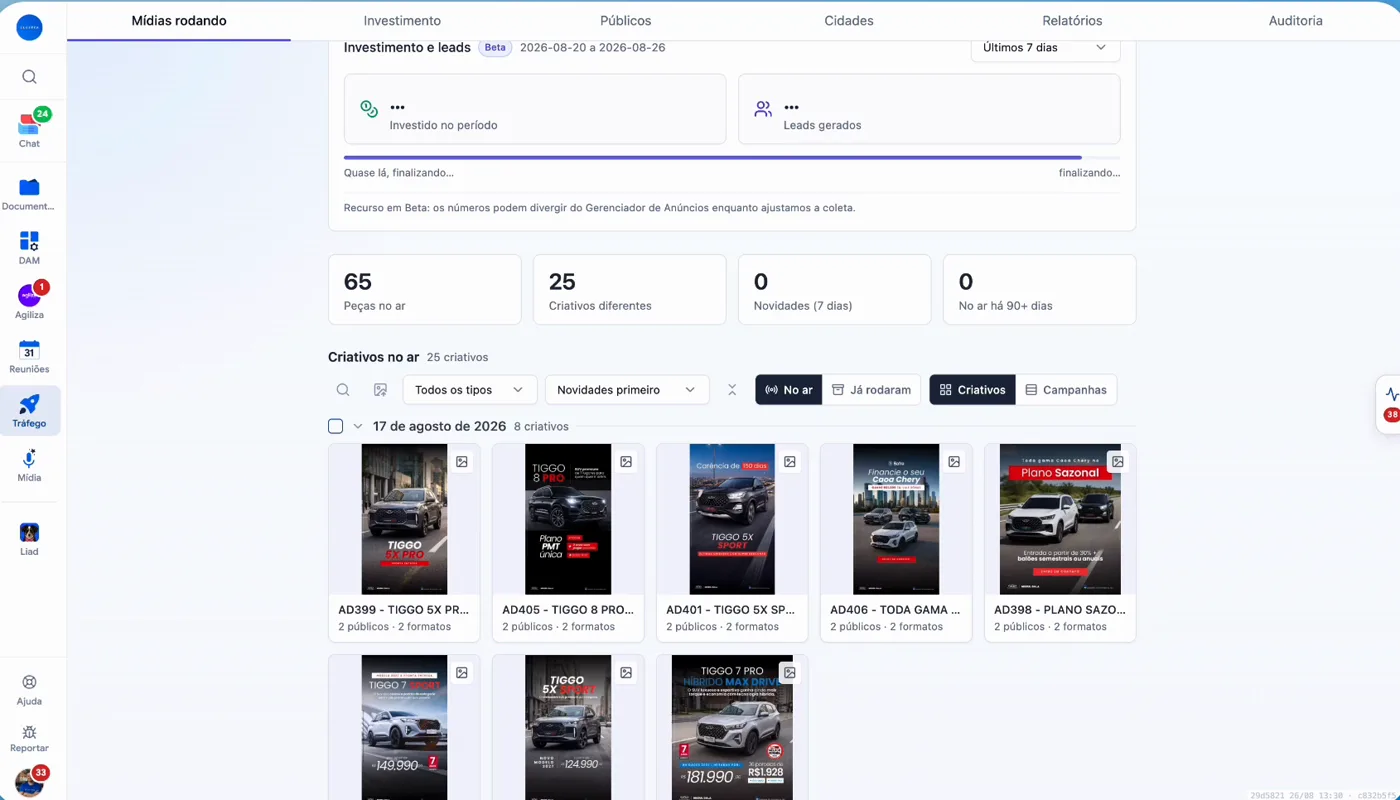
The Cluster Portal brings media and CRM information together to track leads, deals and investment. This view helps us choose the next experiment and understand what deserves to scale.
Explore Cluster's technology Google Ads
 Meta Ads
We identify where opportunities come from.
Media, CRM, data and artificial intelligence support experiments, funnel analysis and continuous operational improvement.
Campaigns that attract and generate demand.
Google AdsMeta Ads TikTok Ads
Leads, opportunities and sales progression.


Measurement, automation and digital experiences.
 Google Analytics
 WordPress
Research, content and analysis with human oversight.
 ChatGPT
 Claude
 Gemini
 Perplexity
Platforms are selected according to each project’s goals and existing setup.
In a B2B industry project, the operation connected media and sales follow-up to assess demand quality and adjust campaigns over 59 days.
See the full case and data (Portuguese)Case results from June 19 to August 16. Open deals are opportunities under negotiation. Results vary with each operation's context.
The method can be applied to established operations. These usually involve more teams, systems and approvals. We start with a clearly defined problem, align owners and decide how to measure the change before expanding the scope.
Paid media is one part of acquisition. Growth Hacking also examines offers, website experience, qualification, customer contact, retention and expansion. The business bottleneck sets the priority, which may be before or after the ad.
Yes. We combine Cluster's strategy and execution with your team's knowledge of customers, product and operations. Responsibilities and approval workflows are defined at the start of the project.
It depends on the starting point, data volume and buying cycle. Operational improvements may be visible before revenue or retention changes. Each experiment receives an analysis window suited to its metric, with no universal deadline or guarantee.
Not necessarily. We first assess your current systems, historical data quality and integration options. Tool changes only enter the plan when necessary for the objective and feasible for the operation.
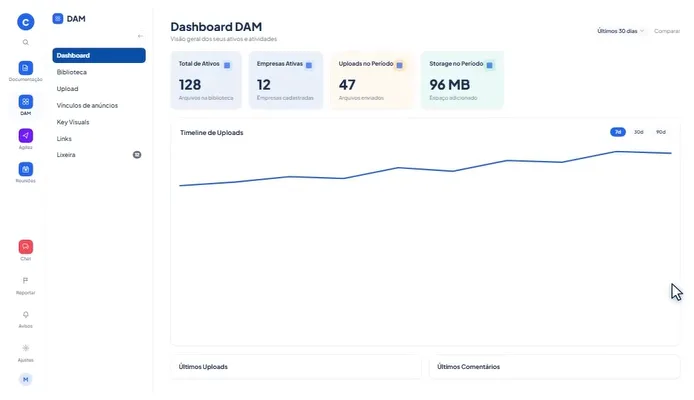
We developed the Cluster Portal to bring our team, deliverables and data together in one place. Our own technology supports the work we do every day.
Media and CRM data help make sense of experiments, prioritize opportunities and guide the next cycle.
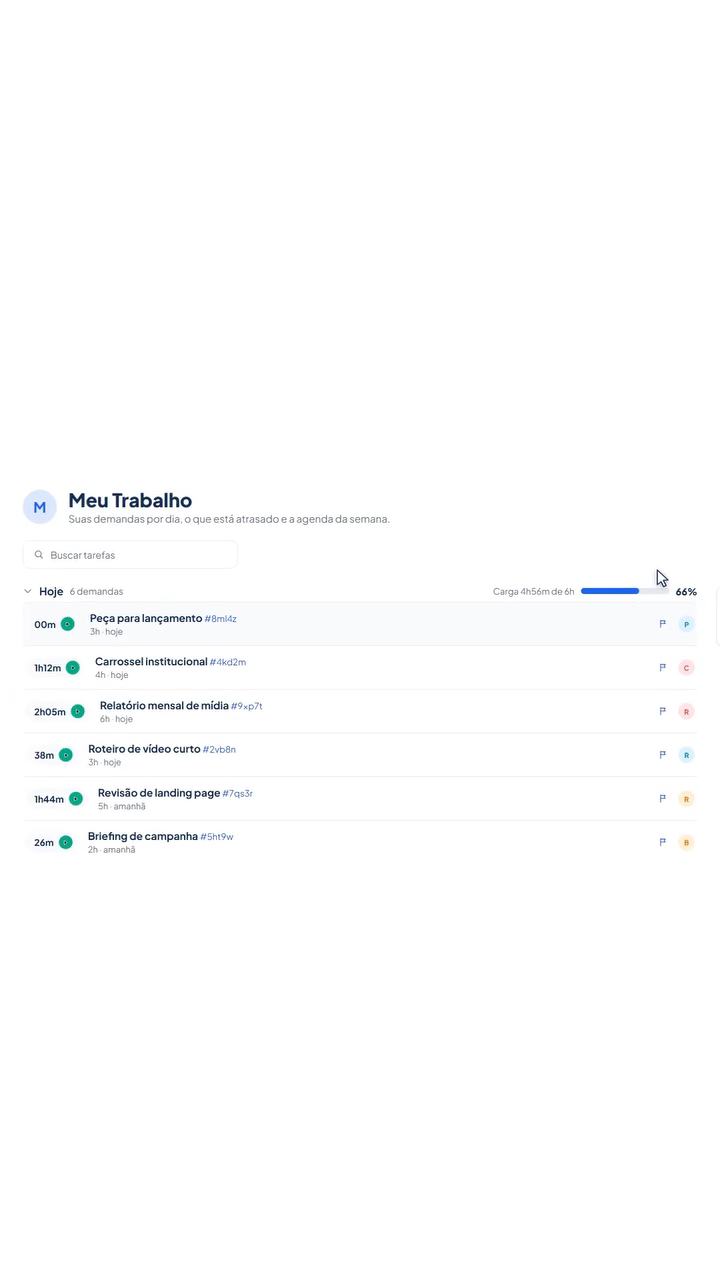
Each cycle’s actions become part of the team’s workflow, with deadlines and priorities to track execution.
Tell us where your company wants to go and how it operates today. Let's discuss priorities, data and how we could work together.